

5 Construction Site Hazards AI Vision Catches Before They Become Incidents
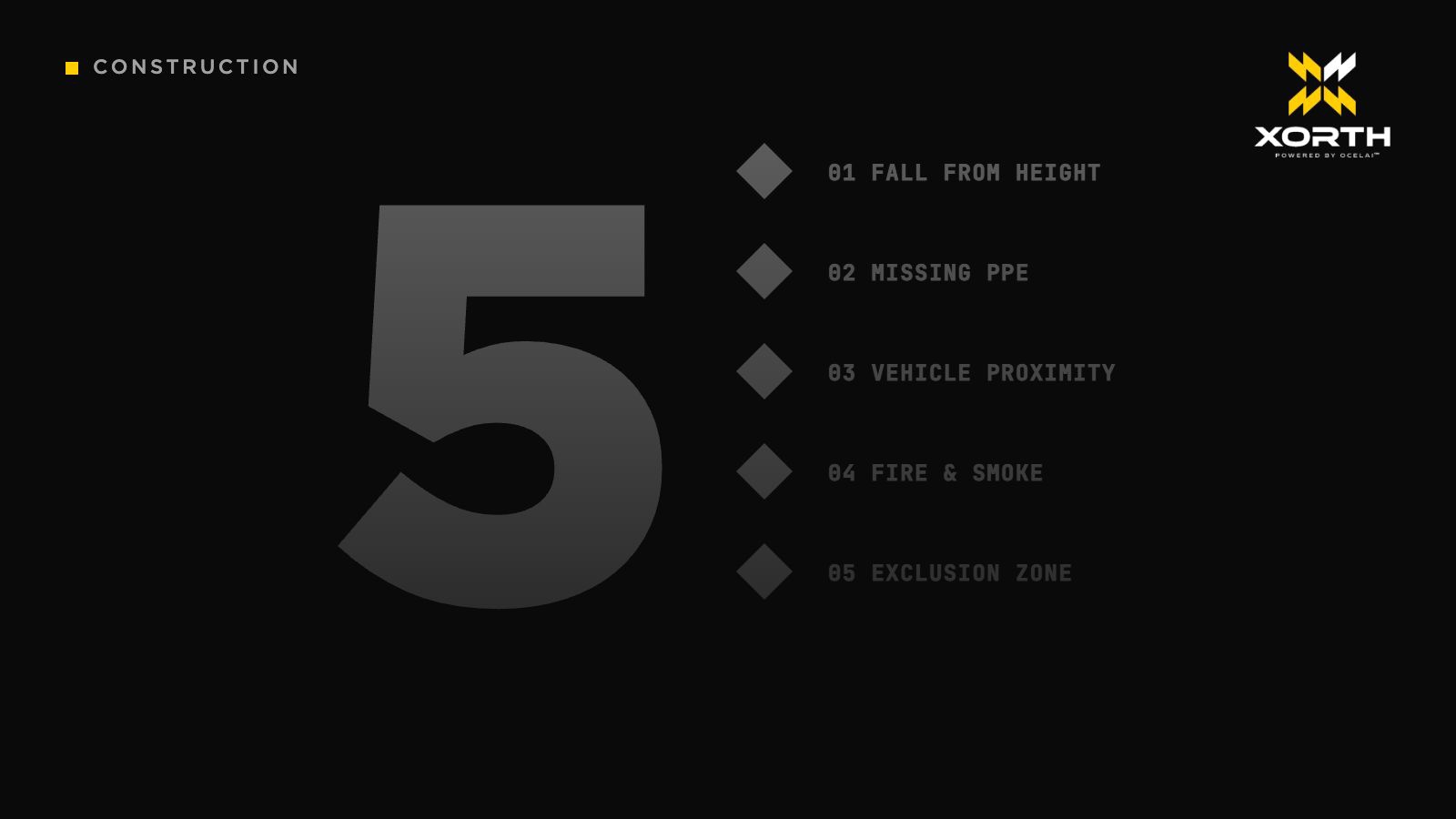
Existing site cameras paired with computer vision surface unsafe acts in real time. Here are five exposures Xorth flags while a supervisor can still do something about them.
Why traditional CCTV is not enough
Most Indian sites already have cameras. Very few have anyone watching them. Footage is reviewed after an incident, which makes CCTV evidence rather than protection — useful to the investigation, useless to the person who was hurt.
Continuous detection changes what the same hardware is for. Cameras stop being a record of what went wrong and start producing leading-indicator data: unsafe acts and unsafe conditions, counted, timestamped and attributable to a zone and a shift.
1. PPE non-compliance
Helmets, hi-vis, eye protection, gloves, footwear. PPE sits at the bottom of the hierarchy of controls — it is what you rely on when everything above it has failed, which is exactly why compliance has to be real rather than assumed. Gate checks sample a moment; continuous detection produces a compliance rate by zone and by shift that you can actually manage against.
2. Work at height without fall arrest
Falls from height are consistently among the largest causes of construction fatalities worldwide, and India publishes no consolidated national construction fatality statistic to size the problem domestically. Detection flags workers in elevated zones without a correctly worn harness connected to a suitable anchorage — including the case that kills people most often, which is a harness worn but never clipped.
3. Personnel inside the swing radius
A worker inside the swing radius of a crane or excavator, or beneath a suspended load, is a line-of-fire exposure — the category behind a large share of struck-by fatalities. Detection identifies the simultaneous presence of plant in motion and people in the exclusion zone, and alerts within seconds. This is the control your lifting plan already specifies; the model simply verifies that it is holding.
4. After-hours intrusion
Unattended sites lose plant, fuel and material, and a generic motion alarm that cannot tell a trespasser from a stray dog gets muted inside a fortnight. Detection distinguishes a person on the perimeter from an animal, so the alerts that reach security at 3am are worth getting out of bed for.
5. Fire and smoke
Sites combine hot work, fuel storage and combustible material in close proximity, often without fixed detection coverage. Visual detection gives early warning at the first visible signs of fire or smoke — as an additional layer alongside your statutory detection and suppression system, never as a replacement for it. Specifying camera-based detection in place of a statutory system would not survive a fire safety audit, and should not be attempted.
The shift from forensic to preventive
The change is in the operating model, not the technology. Sites with continuous detection move from reconstructing what happened to intervening in what is about to. Same cameras, same crews, different question being asked of the footage.
Want to see this on your sites? We connect to existing CCTV over RTSP and can usually be live on your first cameras within a week.
Product, safety and AI research notes from the team building Xorth.
Xorth connects to the cameras you already own. See real-time detection running on your own feeds.
Book a demo